Tell us: Which song deserves more attention?

Tell us: Which song deserves more attention?

We all know a song that stays in the shadows despite having all the ingredients of a hit. We've asked several music and cultural experts about their hidden gems and received fantastic recommendations, which we'll share with you starting in September.

With The Rest now having over 7,500 members, it's time to get the community more involved. After all, we're all passionate music fans who love the contexts and stories behind the songs.

Join us and share a song that deserves more attention by filling out this form!

We look forward to your submissions! Oh, and please understand if your song doesn't make it to the shortlist, as we can only feature a limited number in our newsletters.

xoxo, The Rest

PS: If you are not yet familiar with The Rest, you can get an idea below.
Monira Al Qadiri’s Current Track Crush

Monira Al Qadiri’s Current Track Crush

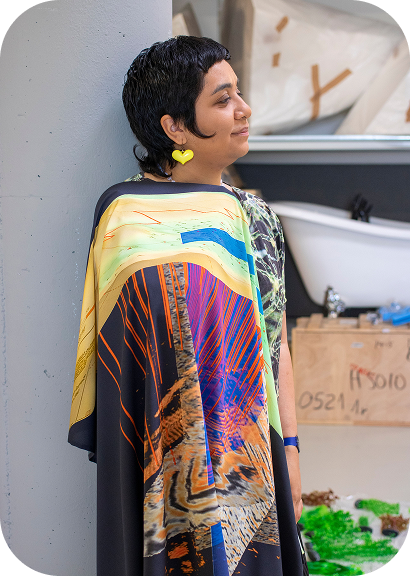
Monira Al Qadiri is a visual artist—but like most labels, this description barely scratches the surface. Her work moves across borders as much as it does across ideas. Born in Senegal, raised in Kuwait, educated in Japan and now based in Berlin, her practice reflects a life shaped by layered cultural memory and academic research.

Photo © Raisa Hagiu

Her artistic work often orbits the cultural, political and emotional afterlives of oil. She examines petrocultures not just as an economic force, but as something that has reshaped how we imagine the future.

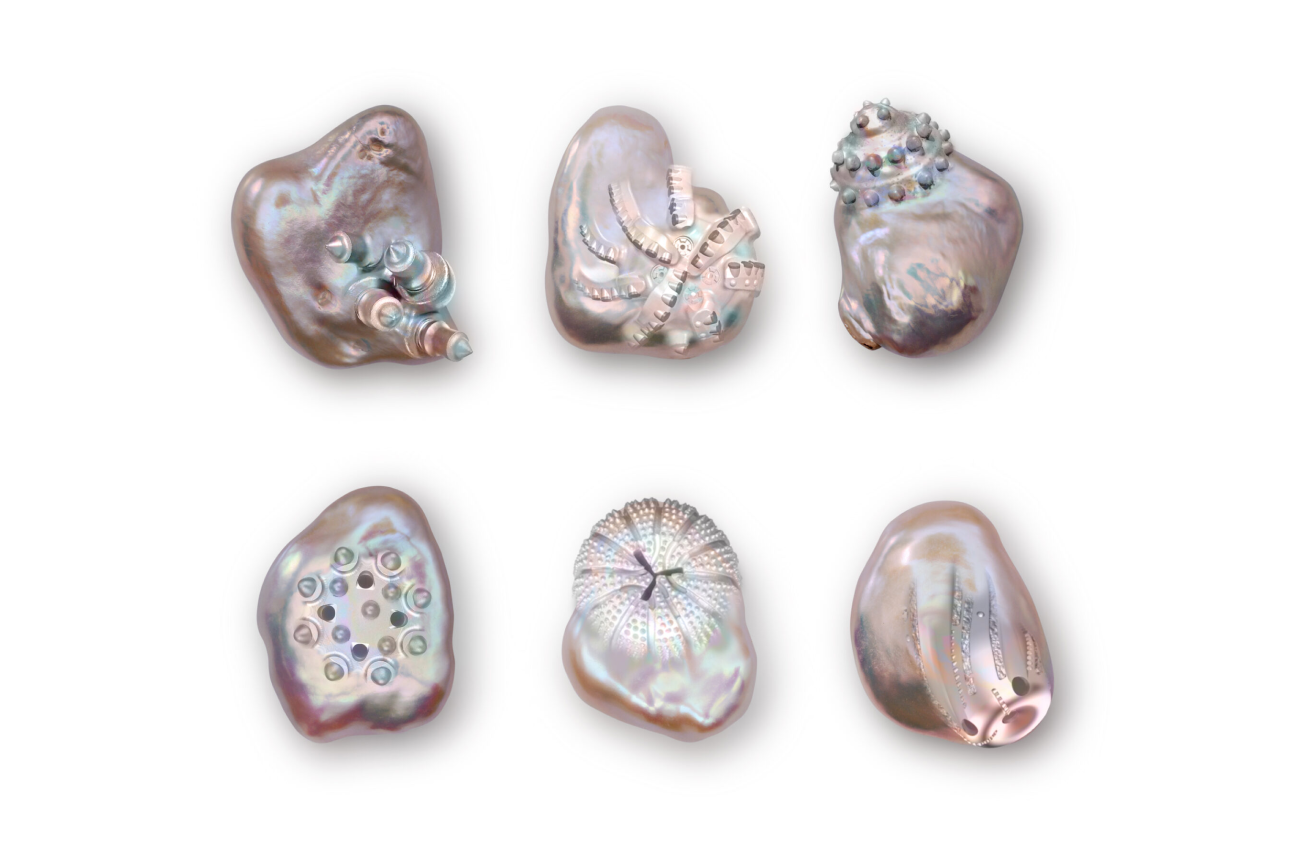
Monira Al Qadiri, Render for “Globule of Mutated Dissonance”, 2021. Courtesy of the artist

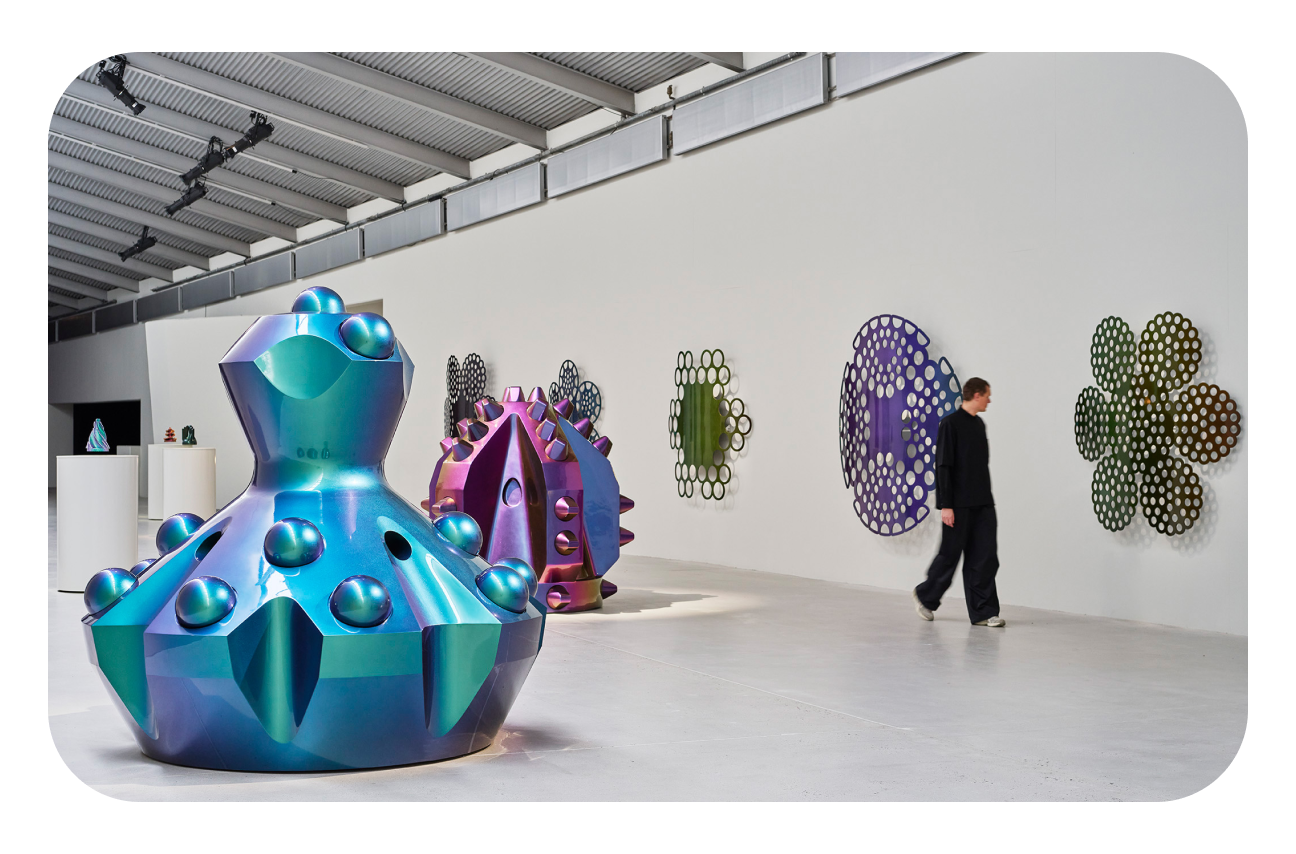
Her installations and sculptures often take on an uncanny beauty: iridescent drill heads, floating petrochemical forms, shimmering surfaces that shift with light. What first appears seductive slowly reveals its weight: systems of extraction, global inequality, environmental collapse. Because oil is not just fuel—it’s embedded in nearly everything around us, from plastics to cosmetics to infrastructure. Al Qadiri traces how this material has come to define contemporary life, while asking what remains once it’s gone.

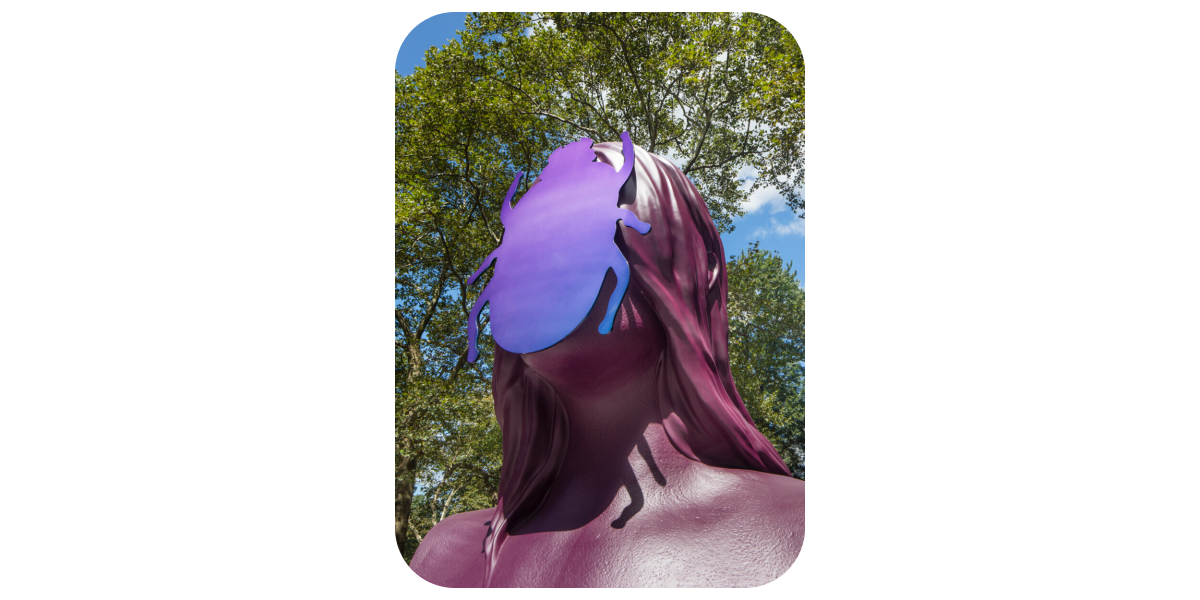
Growing up in Kuwait after the transition from pearl diving to oil economies, her perspective is shaped by both memory and rupture. This history surfaces in her work as a tension between past and future, mythology and speculation. Ancient symbols—like pearls or scarabs—reappear as futuristic, almost alien forms, pointing toward worlds that feel both familiar and estranged. With a mix of humor and unease, she turns the infrastructures of power into something strangely poetic.

Monira Al Qadiri First Sun, 2025 © Photo: Nicholas Knight, courtesy of Public Art Fund, NY. Monira Al Qadiri: First Sun was co-commissioned by Public Art Fund and Lassonde Art Trail

Alongside this, her academic interest in the aesthetics of sadness—rooted in Middle Eastern poetry and music—adds another dimension. It’s this tension between surface and depth, beauty and unease, that makes her practice so captivating.

Her current projects reflect that same range: from solo exhibitions at the Berlinische Galerie and ARKEN Museum to public sculptures in places as varied as Central Park in New York and the windswept Danish coast. Each of these works extends her ongoing inquiry into the afterlives of extraction—where industrial histories blur into personal memory and myth, and where the legacy of oil lingers not just in the ground, but in the ways we see, feel, and narrate the world.

Monira Al Qadiri, Chameleon, 2025, Installations view, ARKEN Museum of Contemporary Art. Photo: Anders Sune Berg

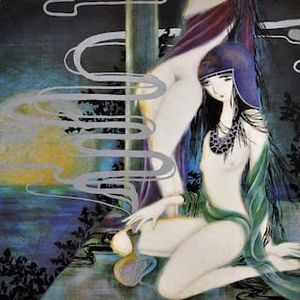
When we asked Monira for a track, she admitted it’s not something she usually does. Still, she sent one: “Hito no inai Shima” (Eng. “An Island Without People”) by Yoshiko Sai feels suspended, melancholic, sparse, almost untethered from time. It drifts rather than moves forward, carrying a sense of solitude that never quite turns into loneliness.

Knowing that Monira lived in Japan for a decade, the song almost feels like a memory that refuses to settle.

Have A World Peace

Have A World Peace

You might know Peach Melba as a dessert of ripe peaches, vanilla ice cream and raspberry purée. Created in the 1890s by French haute cuisine legend Auguste Escoffier and named after Nellie Melba, an Australian opera singer whose voice could fill the grandest opera halls of her time.

Now fast-forward almost a century and a half and swap the silver spoon for a chipped mug. Enter peach|melba, the queer femme indie duo split between Brighton (UK) and Los Angeles, who take that polite idea of “having” something and twist it hard. Their song “Have a Latte” (our song of the day, I might add) opens like a broken-record chant in a café at the end of the world: “have a latte / have a cappuccino / have a cold brew /…/ have a danish / have a pain au chocolat…” Coffee, pastries, brunch staples pile up into a hyper-familiar blur of Starbucks capitalism, hipster foodie culture, Instagram latte art, ethical beans in a burning world. 

And then the list keeps going, but the menu changes: “have a bombing / have a new colony / … / have a torture / have a mini-genocide.” The same deadpan cadence, the same casual delivery. Using sharp sarcasm, the song parallels everyday indulgence with the all-too-everyday atrocities of our world, making the absurdity of both existing simultaneously feel immediate and unmistakable. Set against raw, garage-punk noise, “Have A Latte” turns the comforts of consumption into a brutal, darkly funny wake-up call.

Listen

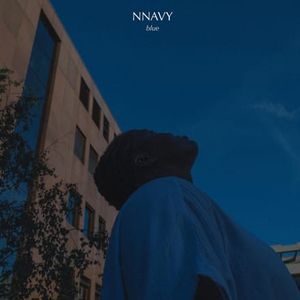
Nnavy Blue Is Our Color of the Day

Nnavy Blue Is Our Color of the Day

Few colors have experienced such shifting significance in Western art history as blue. In antiquity, blue played only a minor role, as it was simply difficult to produce. In the Middle Ages, with the discovery of ultramarine extracted from lapis lazuli, blue gained new value. The precious pigment, at times more expensive than gold, was reserved for the robes of the Virgin Mary. This fundamentally changed its symbolism: blue became the color of heaven, of fidelity and of spiritual purity.

The development of synthetic pigments in the 18th and 19th centuries, such as Prussian blue and cobalt blue, finally made the color more accessible. Artists could use it freely, independent of religious constraints: the new era of blue had begun. In Caspar David Friedrich’s work, it figures as the vastness and infinity of nature; in van Gogh’s, it represents emotional intensity. In Picasso’s famous “Blue Period,” it became a means to express psychological states like melancholy, solitude, reflection.

It goes on and on: Expressionists, especially the circle around Der Blaue Reiter, understood blue as a spiritual color. Vasily Kandinsky saw it as an expression of inner, spiritual states and used it to create compositions that lifted the viewer to an immaterial plane. In the 20th century, Yves Klein pushed this idea further: with his International Klein Blue (IKB), he created monochrome works where blue was no longer just a color, but an experience. Klein described it as an “open window to freedom,” lifting the viewer beyond the physical world.

Which brings us directly to our song of the day, “Blue” by Swiss singer NNAVY, where this promise of freedom and escape slips into sound. Soulful vocals meet a reduced piano, giving each lyric room to breathe. The track feels at once familiar and introspective; it is a space of its own, acoustically shaped, fleeting and elusive, just as the sky and the sea.

Listen


Dig Deeper

Derek Jarman’s 1993 film Blue is a profound and experimental meditation on life, death and identity, serving as his final cinematic testament before his passing from AIDS-related illness. The film unfolds over 79 minutes of a single, unchanging blue screen accompanied by a rich auditory landscape. This includes narrations by Jarman himself, Tilda Swinton, Nigel Terry and John Quentin, alongside a score by Simon Fisher Turner, featuring contributions from artists like Brian Eno and Coil.

The film intertwines two narrative threads. One explores Jarman’s personal experience as a gay man grappling with the physical and emotional toll of AIDS in 1990s London. His deteriorating vision, reduced to perceiving only shades of blue, profoundly influenced the film's aesthetic and thematic direction. At the same time, the film personifies the color blue, depicting its adventures and interactions with other colors. The closing moments are poignant, listing the names of friends and lovers lost to AIDS, underscoring the personal and collective grief experienced during the epidemic.

Often shown at art cinema screenings, you can also find it on the streaming platform Salzgeber Club. It truly is a one-of-a-kind experience.


Adding to Your Listening Pleasure This Week:


Subscribe